
What counts as combustible dust
Combustible dust is any finely divided solid that can burn or explode when it is suspended in air and meets an ignition source. The list of materials is longer than most people expect. Sugar, flour, starch, many plastics and resins, pigments, wood, aluminum and magnesium powders, sulfur, many organic specialty chemicals, and plenty of food and pharmaceutical ingredients all qualify. A material that is perfectly safe sitting in a bag can become an explosion hazard the moment it is milled finer, conveyed, or dumped into a hopper and allowed to form a cloud.
That is why anyone who processes powders, ships them for toll processing, or buys processing services should understand the basics. The hazard does not come from the chemistry alone. It comes from the chemistry combined with particle size and how the material is handled.
The dust explosion pentagon
Most people know the fire triangle: fuel, oxygen, heat. A dust explosion needs two more conditions, which is where the "pentagon" comes from.
Fuel: a combustible dust.
Oxygen: normally just the air in the room.
Ignition: a spark, hot surface, static discharge, friction, or open flame.
Dispersion: the dust suspended as a cloud at a high enough concentration.
Confinement: an enclosure, such as a dust collector, silo, duct, or the building itself, that lets pressure build.
Remove any one side and you prevent the explosion. Real-world dust safety programs work on several sides at once, because no single control is perfect.
Why fine powders are more dangerous
Smaller particles have more surface area per pound. More surface area means faster burning, easier ignition, and a more violent pressure rise. A coarse granule that just smolders can, once milled, produce a dust that ignites from a static spark. So size reduction steps like grinding and jet milling deserve extra attention: the process that gives you the particle size you want can also change the material's explosibility.
The other trap is accumulation. A primary explosion inside a piece of equipment can shake loose dust that has settled on beams, ledges, and ductwork, then ignite that cloud in a far larger secondary explosion. Many of the deadliest industrial dust incidents were secondary explosions. OSHA's emphasis program flags settled dust deeper than 1/32 inch, about the thickness of a paper clip, covering more than 5% of a room's floor area.
Combustible dust testing
Safety data sheets often do not tell you how explosive a dust is, so testing fills the gap. The common lab tests are:
Explosibility screening (go/no-go), which answers the first question: can this dust explode at all?
Kst and Pmax (ASTM E1226), which measure how fast pressure rises and how high it peaks. These numbers drive the sizing of explosion vents and suppression systems.
Minimum ignition energy, or MIE (ASTM E2019), which tells you how small a spark can set the dust off. Low MIE dusts make static control critical.
Minimum explosible concentration, or MEC (ASTM E1515), the leanest cloud that can propagate a flame.
Minimum ignition temperature for dust clouds and dust layers, which matters around hot surfaces like motors and dryers.
Kst results sort dusts into hazard classes: St 1 (up to 200 bar·m/s), St 2 (201 to 300), and St 3 (above 300). Most organic powders land in St 1, while some fine metals reach St 3.
The rules: NFPA 660 and OSHA
NFPA 660, Standard for Combustible Dusts and Particulate Solids, consolidated the earlier dust standards (NFPA 61, 484, 652, 654, 655, and 664) into a single document in its 2025 edition. Its core requirement carries over from NFPA 652: facilities that handle combustible dust must complete a Dust Hazard Analysis, or DHA, which identifies where dust hazards exist in the process and how each one is controlled. Existing facilities were required to finish their DHAs by September 2020 under NFPA 652.
OSHA does not have a single dedicated combustible dust standard. It enforces through the General Duty Clause, housekeeping and electrical rules, the Hazard Communication Standard (which lists combustible dust as a hazard requiring SDS warnings), and a Combustible Dust National Emphasis Program that targets inspections at industries with known dust risk.
The stakes are real. The U.S. Chemical Safety Board's study of 1980 to 2005 counted 281 combustible dust incidents that killed 119 workers and injured 718. The 2008 Imperial Sugar refinery explosion in Georgia killed 14 people.
Questions to ask a toll processor about dust
If you are sending a powder out for milling, screening, blending, or packaging, dust handling is part of the vendor evaluation. Ask:
Do you need explosibility data on our material, and will you ask for it before quoting?
How is dust collected at transfer points, bagging stations, and mills?
How do you control static during bagging and bulk transfers?
What is your housekeeping routine for settled dust?
How do you keep dust from one customer's product out of the next customer's batch?
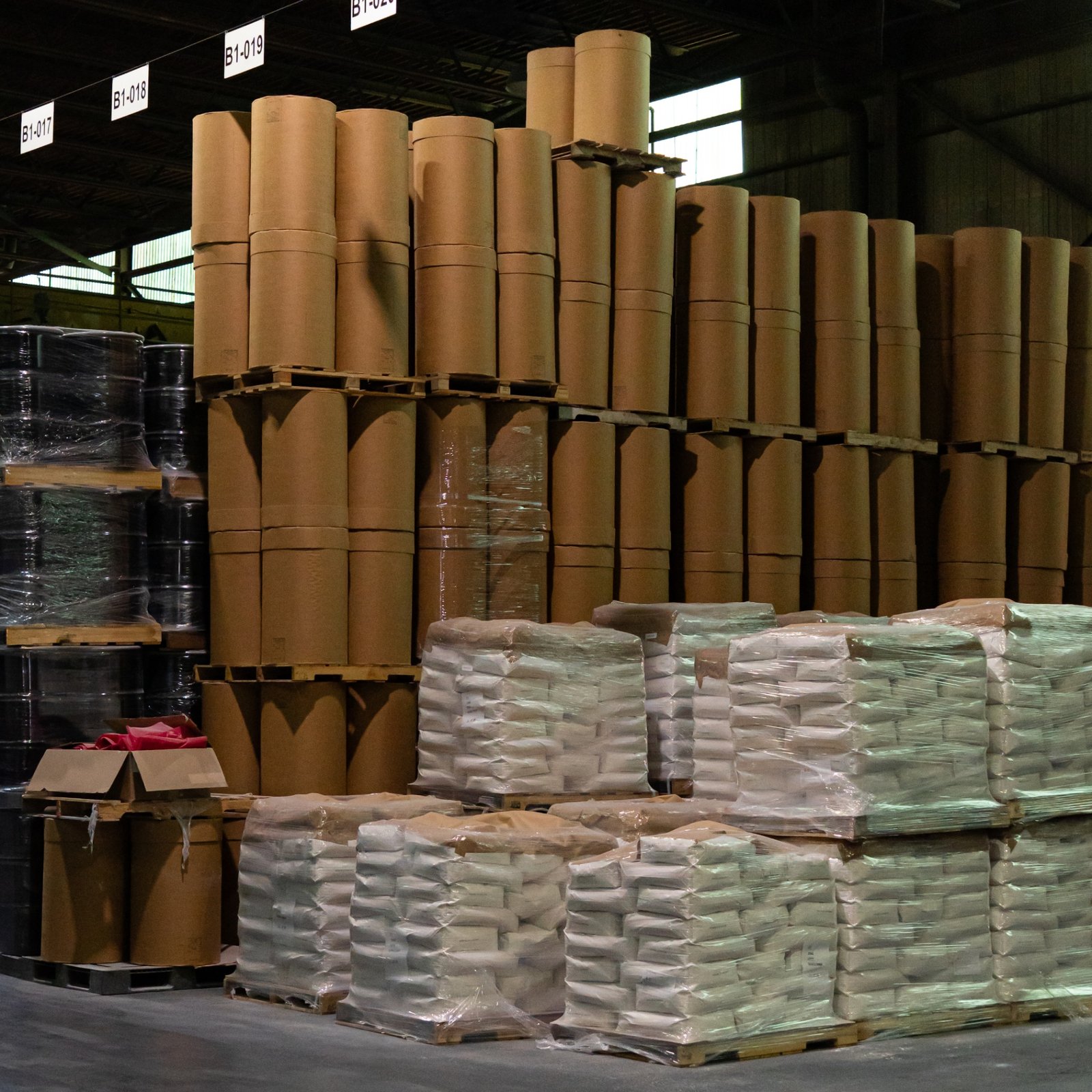
At our Elyria, Ohio facility, a dedicated dust collection system serves the powder handling lines. If you have explosibility data for your material, send it with your inquiry. If you do not, tell us that too, because it changes how a project should be planned. You can see the dust collection setup and the rest of our lines on the equipment page.
Frequently asked questions
What is combustible dust?
Combustible dust is a fine particulate solid that can catch fire or explode when suspended in air at a sufficient concentration and exposed to an ignition source. Common examples include sugar, flour, plastics, pigments, wood, and many metal and chemical powders.
What are the five elements of a dust explosion?
Fuel (combustible dust), oxygen, an ignition source, dispersion of the dust into a cloud, and confinement. Together they are called the dust explosion pentagon.
What is combustible dust testing?
Lab testing that measures whether a dust can explode and how severe an explosion would be. Common tests include go/no-go screening, Kst and Pmax (ASTM E1226), minimum ignition energy (ASTM E2019), and minimum explosible concentration (ASTM E1515).
Which NFPA standard covers combustible dust?
NFPA 660, Standard for Combustible Dusts and Particulate Solids. Its 2025 edition consolidated NFPA 61, 484, 652, 654, 655, and 664 and keeps the requirement for a Dust Hazard Analysis.
Does OSHA have a combustible dust standard?
Not a single dedicated one. OSHA enforces combustible dust hazards through the General Duty Clause, housekeeping and electrical rules, the Hazard Communication Standard, and its Combustible Dust National Emphasis Program.
Can a toll processor in Ohio handle combustible powders?
Many can, with the right controls. US Chemical Services in Elyria, Ohio runs a dedicated dust collection system on its powder handling lines. Call (440) 529-8868 to talk through your material.
Need help with your chemical processing project?
Talk to our team today. Most projects start within 48 hours of receiving materials.