
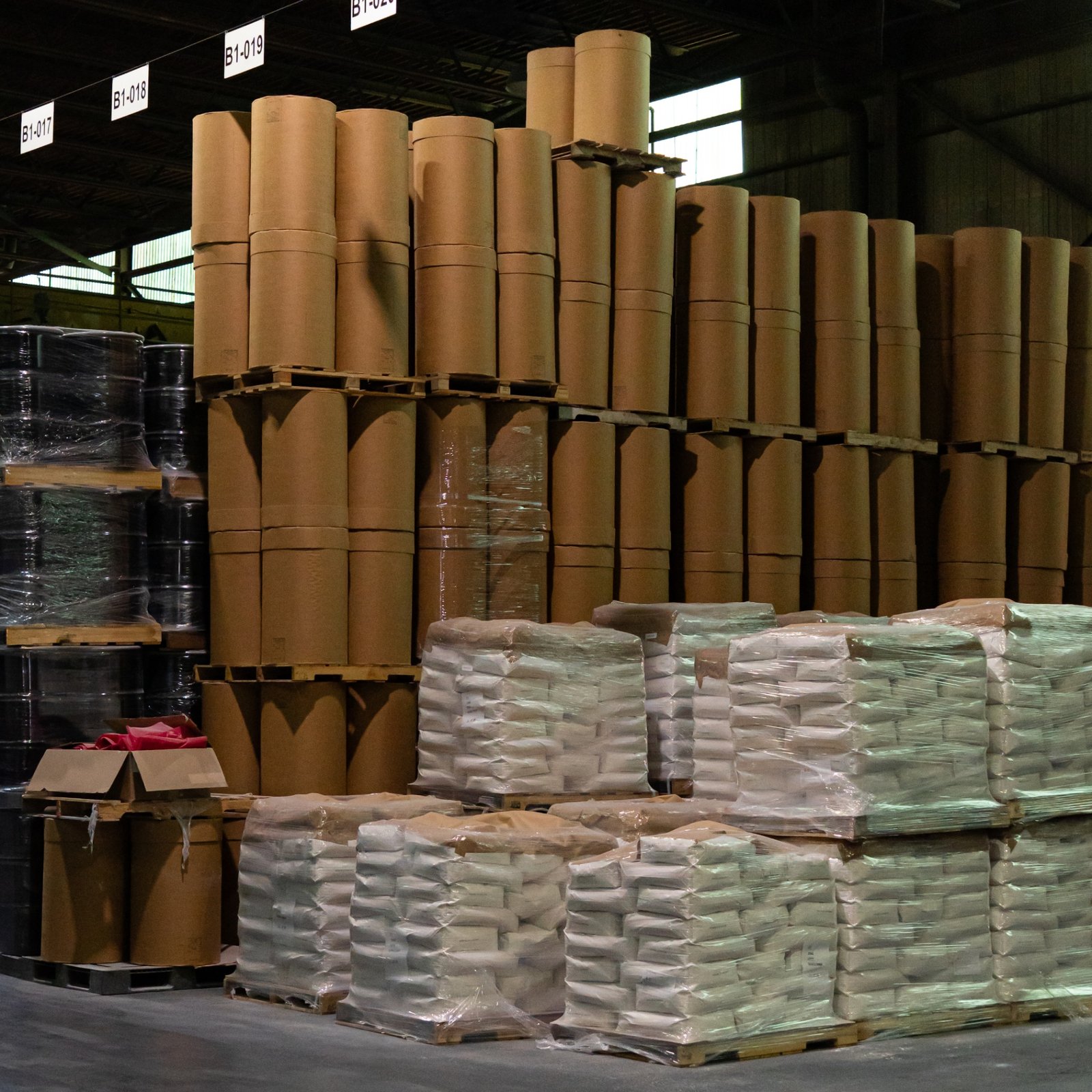
Every time a chemical moves from one container into another, someone has to decide what goes on the new label. A super sack becomes forty 50 lb bags. A drum becomes a pallet of pails with a distributor's brand on them. The product has not changed, but every new package needs its own label, and in the US the rules come from OSHA's Hazard Communication Standard. Here is the version we walk customers through before a run.
The six things a shipped container label must show
OSHA's Hazard Communication Standard, 29 CFR 1910.1200, says the chemical manufacturer, importer, or distributor "shall ensure that each container of hazardous chemicals leaving the workplace is labeled, tagged or marked." Paragraph (f)(1) then lists the required elements:
- Product identifier, the name or number that matches the safety data sheet.
- Signal word, either "Danger" for the more severe hazards or "Warning" for the less severe ones.
- Hazard statements, the standardized phrases that describe the nature of the hazard, such as "Causes serious eye irritation."
- Pictograms, the red-bordered diamonds.
- Precautionary statements, the recommended measures for handling, storage, first aid, and disposal.
- Name, U.S. address, and U.S. telephone number of the manufacturer, importer, or other responsible party.
The GHS pictograms and what each one flags
The pictograms are the part of the label most people recognize and the part most often gotten wrong. OSHA's pictogram page states that each one is a square set on its point with a black symbol "with a red frame sufficiently wide to be clearly visible," and that a red frame with no symbol inside "is not a pictogram and is not permitted on the label." Here is what each symbol signals.
| Pictogram | Typical hazards it flags |
|---|---|
| Flame | Flammables, pyrophorics, self-heating, organic peroxides |
| Flame over circle | Oxidizers |
| Exploding bomb | Explosives, self-reactives, organic peroxides |
| Skull and crossbones | Acute toxicity, fatal or toxic |
| Corrosion | Skin burns, eye damage, corrosive to metals |
| Gas cylinder | Gases under pressure |
| Health hazard | Carcinogen, sensitizer, target organ toxicity |
| Exclamation mark | Irritant, skin sensitizer, harmful if swallowed |
| Environment | Aquatic toxicity (not required by OSHA) |
A few practical notes. If the skull and crossbones is on the label, the exclamation mark should not also appear for the same hazard. Likewise, if the corrosion symbol is used, the exclamation mark should not be added for skin or eye irritation. OSHA does not enforce the environment pictogram, but many labels carry it because the same artwork ships to other GHS countries. Pictograms come straight from the hazard classification in Section 2 of the SDS. If your label pictograms do not match Section 2, one of the two documents is wrong.
Repackaging and private labels: whose name goes on it
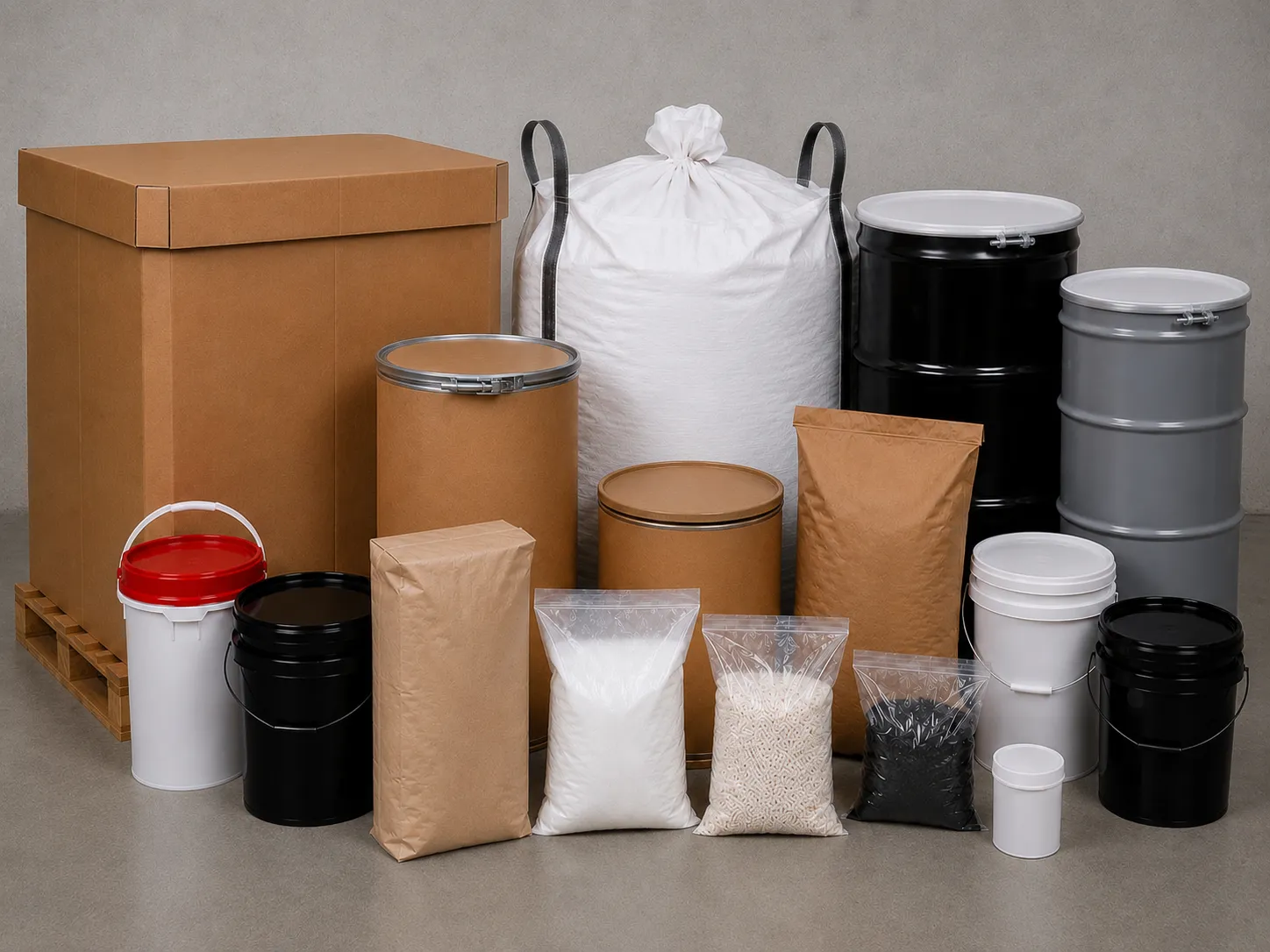
The responsible party line is where repackaged and private label product gets interesting. When a distributor buys bulk and sells it in smaller packages under its own brand, the distributor's name, U.S. address, and U.S. phone number typically go on the label, because that is who customers will call. The hazard content, meaning the signal word, hazard statements, pictograms, and precautionary statements, still has to match the classification on the SDS that ships with the product.
On our private labeling work, the label content comes from the customer, either as finished artwork or as content we print in-house. Our job is application and quality control: placement, legibility, and adhesion on bottles, bags, drums, pails, totes, and super sacks. The responsible party owns the classification and the wording.
The same applies when we break bulk for distributors through our chemical repackaging service. Bulk material often arrives with a bulk label or with label information transmitted with the shipping papers, which 1910.1200(f)(5)(ii) allows for bulk shipments. Every smaller container that leaves needs its own complete label.
Small containers
A 500 gram sample jar or a 1 gram pre-weigh bag cannot always carry a full label at readable size. Paragraph (f)(12) gives relief, but only where it is not feasible to use pull-out labels, fold-back labels, or tags carrying the full information. If that test is met, a container of 100 ml or less must still show the product identifier, pictograms, signal word, the manufacturer's name and phone number, and a statement that the full label is on the immediate outer package. Containers of 3 ml or less must bear "at a minimum, the product identifier." In both cases the outer package carries the complete label plus a statement that the small containers must be stored in it when not in use.
When labels have to change
Labels are not set-and-forget. Paragraph (f)(11)(i) requires anyone who becomes "newly aware of any significant information" about a chemical's hazards to "revise the labels for the chemical within six months." For product that has already been released for shipment and is sitting in a warehouse, the standard gives an option not to relabel those containers, provided the updated label goes with each individual container when it ships.
The 2024 update to the standard also has firm dates. Manufacturers, importers, and distributors evaluating substances had to comply with the modified provisions no later than May 19, 2026. For mixtures, the deadline is November 19, 2027. For anyone selling blends, 2027 is the date to plan around, and relabeling existing inventory is easier to schedule early than in the final month.
A pre-run label checklist
- Label hazard elements match SDS Section 2 word for word.
- Responsible party name, U.S. address, and U.S. phone are correct.
- Label size suits each container in the run.
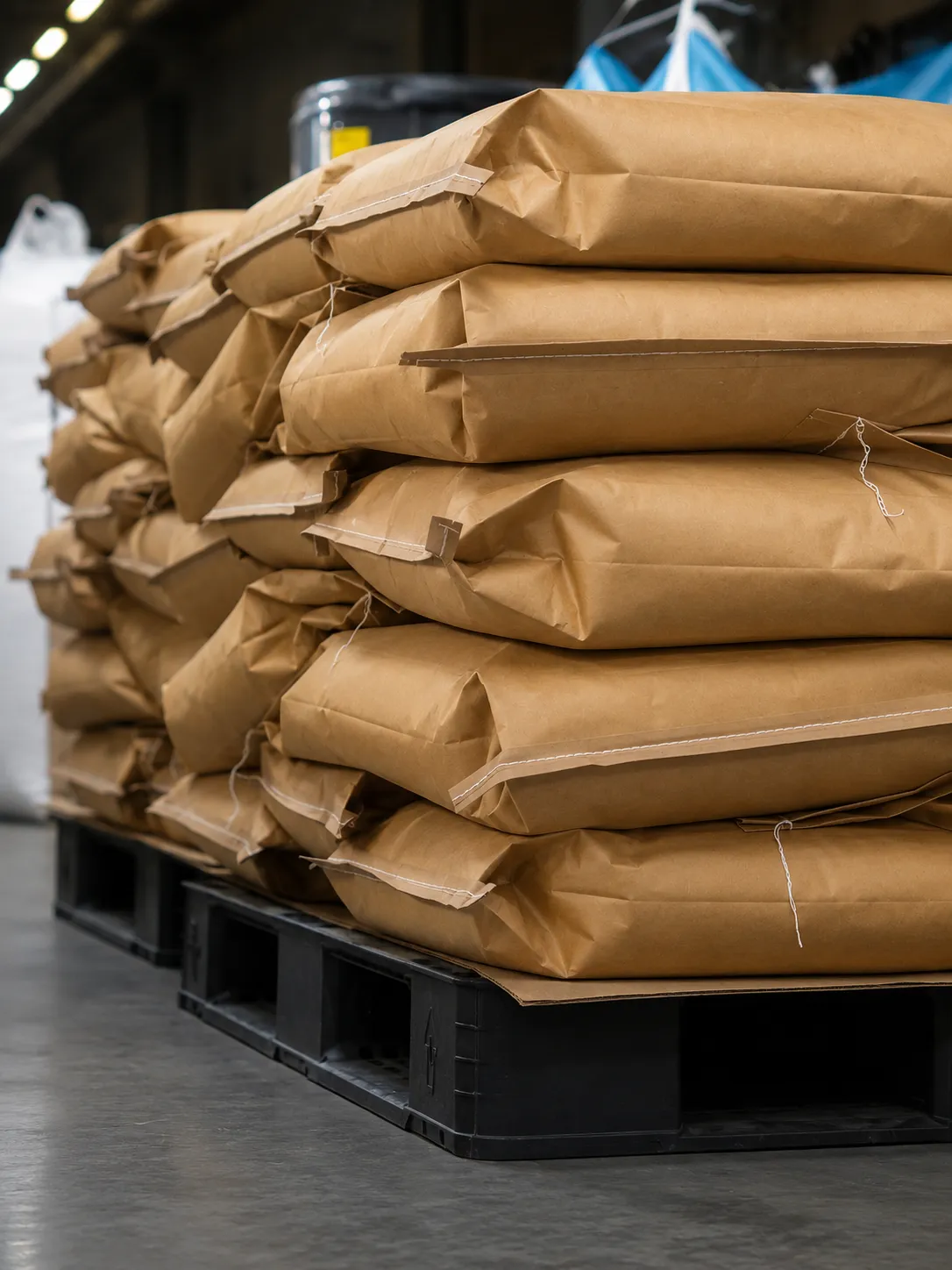
- Label stock and adhesive suit the package surface: kraft, woven poly, steel, HDPE.
- Lot number and net weight placement agreed.
- Any DOT marks needed for shipping are planned separately from the HazCom label.
That last point trips people up. HazCom labels and DOT shipping marks are separate requirements that often share one package, so plan both before artwork is printed.
If you are planning a relabel campaign or a new private label line, send us the SDS and your label artwork and we can tell you quickly how the run would be set up.
Frequently asked questions
What must a GHS label include under OSHA?
A shipped container label under OSHA's Hazard Communication Standard must show six elements: product identifier, signal word, hazard statements, pictograms, precautionary statements, and the name, U.S. address, and U.S. phone number of the manufacturer, importer, or other responsible party.
How many GHS pictograms are there?
There are nine GHS pictograms. OSHA enforces eight of them. The ninth, the environment pictogram for aquatic toxicity, is part of GHS but not required by OSHA.
Who is responsible for the label on a private label chemical?
The company listed as the responsible party owns the label content and the hazard classification behind it. The packager's job is putting the correct label on each container, legible and firmly attached.
How long do you have to update a label after new hazard information?
OSHA requires labels to be revised within six months of becoming aware of significant new hazard information. Containers already released for shipment can ship without relabeling if the updated label is provided with each container.
What is the HazCom 2024 deadline for mixtures?
Chemical manufacturers, importers, and distributors evaluating mixtures must comply with the modified provisions of the 2024 Hazard Communication Standard no later than November 19, 2027. Employers have until May 19, 2028 to update workplace labeling, programs, and training for mixtures.
How fast can a relabel or repackaging run be turned around in Elyria, Ohio?
Standard turnaround at U.S. Chemical Services in Elyria, Ohio is 3 to 5 days, with same-day rush options available. Projects typically start within 48 hours of materials arriving.
Need help with your chemical processing project?
Talk to our team today. Most projects start within 48 hours of receiving materials.