
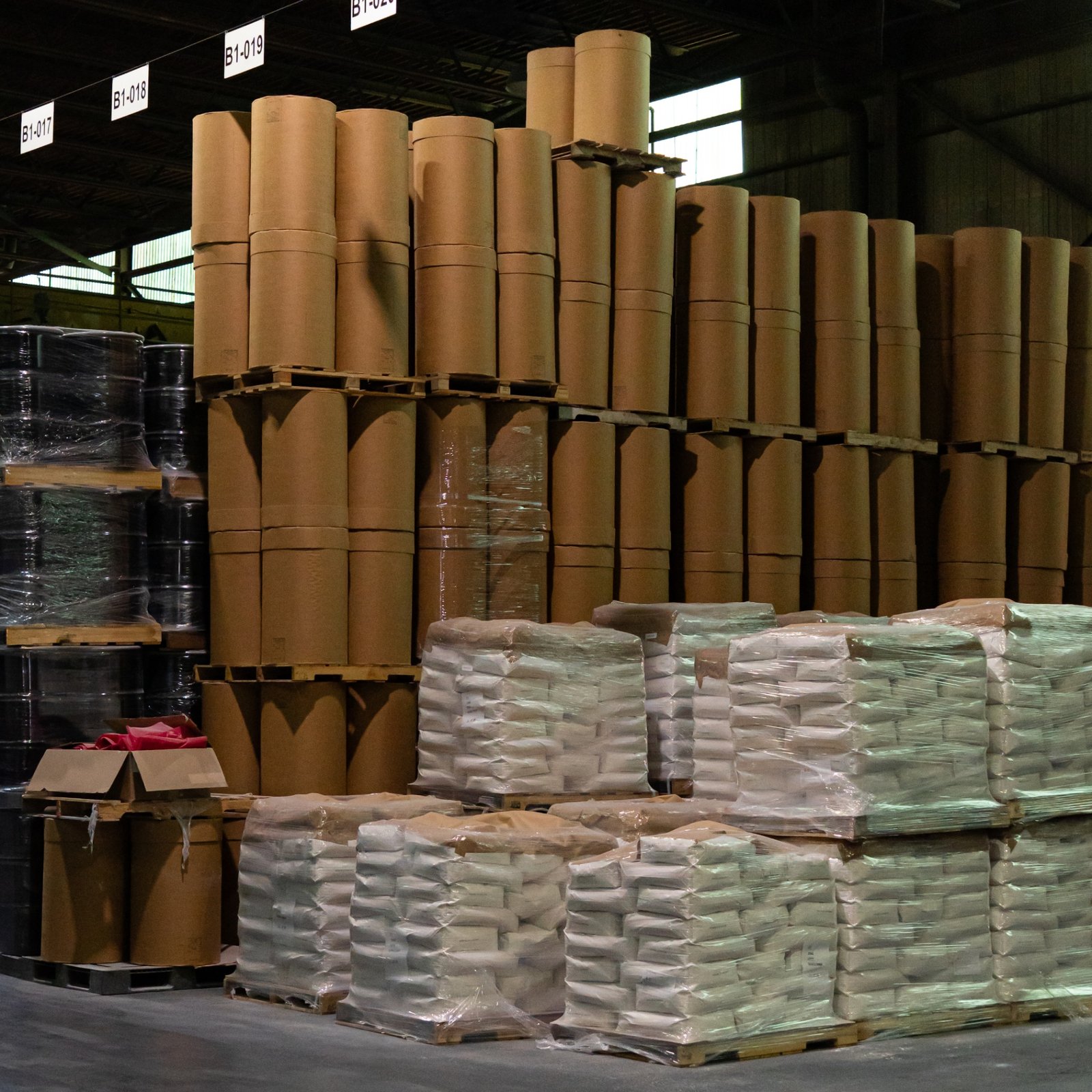
The pallet of product nobody wants to talk about
Somewhere in most chemical warehouses sits a lot everyone walks past: powder that arrived free-flowing and turned into bricks. Hygroscopic materials pull moisture through packaging over time. Heat cycles in trailers and warehouses fuse fine particles. The simple weight of stacked super sacks compresses the bottom bags into slabs. Pigments, flame retardants, plastics additives, and ag chemicals are the usual suspects, but almost any fine powder will cake given enough humidity, pressure, and months.
The expensive reflex is to treat caked product as lost: discount it, rework it into something lower grade, or write it off and landfill it. The material underneath the clumps is usually still perfectly good. It failed a physical test, not a chemical one, and physical problems have mechanical solutions.
What deagglomeration does, and does not do
Deagglomeration, delumping if you prefer the shop word, converts caked, hard, or solid material back to a free-flowing state using mechanical energy only. No heat, which matters for heat-sensitive products, and no chemical additives. The particles that were fused at their contact points get separated back to something close to their original size distribution. The chemistry does not change, which is the entire point: what you get back is your product, flowing the way it did the day it was made.
Afterward, flow is verified the honest way. In-house screening and sieve analysis confirms particle size against your spec, in the same building, on the same job. And if what you actually need is a finer particle than the original, that is a different service, milling and grinding, and we will tell you which one your material calls for rather than sell you both.
The part that surprises people: we can often skip the unpacking
The standard industry approach to caked product is to cut open every bag, dump, process, and repack, which adds labor, dust exposure, packaging cost, and product loss at every step. Our deagglomeration process can often work material within its existing packaging, bags and super sacks included. The container goes in caked and comes out free-flowing, still sealed, still labeled, still on its pallet.
When in-package processing fits your material, the economics change completely: no repackaging cost, no relabeling, no transfer loss, and product that goes straight back into sellable inventory. When it does not fit, we say so up front and quote the unpack-and-repack version, with repackaging into any configuration you want on the way back out.
What a delumping project looks like
Send us photos of the material and packaging, the product name or a safety data sheet, the quantity, and what free-flowing needs to mean for your downstream process. Quotes go out same day. Ship the material to Elyria, and projects typically start within 48 hours of arrival, with standard turnaround of 3 to 5 days and rush options when a customer order is waiting on the outcome. Small trial batches are welcome; plenty of customers send one pallet to prove the process before releasing a campaign.
The math is rarely close. Recovered product sells at full price, and the toll on delumping is a fraction of the material's value, which is why the pallet everyone walks past is usually the easiest money in the warehouse. Before you discount a caked lot or book the disposal fee, get the quote.
Frequently asked questions
What causes chemical powders to cake or clump in storage?
Moisture absorption, temperature cycling, and compression are the big three. Hygroscopic powders pull humidity through packaging, warehouse and trailer heat cycles fuse fine particles at their contact points, and the weight of stacked pallets presses lower bags into slabs. Time makes all three worse, which is why slow-moving inventory cakes first.
Does deagglomeration change the chemical composition of my product?
No. Delumping uses mechanical energy only, no heat and no additives, to separate particles that fused physically. The chemistry is untouched, and post-process sieve analysis verifies the particle size distribution is back to spec.
Can you really process powder without opening the bags?
Often, yes. Our methods can restore flow to material inside its existing bags and super sacks, so product comes back sealed, labeled, and sellable with no repackaging cost or transfer loss. Where a material does need to be unpacked, we quote that honestly and can repackage into any configuration afterward.
How fast can caked material be turned around?
Standard turnaround is 3 to 5 days at our Elyria, Ohio facility, with projects typically starting within 48 hours of arrival and rush options available. A single-pallet trial is a common first step and moves on the same timeline.
Is recovering caked product worth it versus writing it off?
Almost always. The processing toll is a small fraction of the material's market value, while a write-off costs you the full value plus disposal. If the underlying product is in spec, delumping returns it to inventory at full price, which is why distributors and manufacturers send us caked lots by the truckload.
What kinds of materials do you deagglomerate?
Fine powders across the industries we serve daily: pigments and carbon blacks, flame retardants, plastics and rubber additives, specialty chemicals, water treatment products, and agricultural chemicals, in quantities from a single pallet to multi-truck campaigns.
Need help with your chemical processing project?
Talk to our team today. Most projects start within 48 hours of receiving materials.