What toll blending is, in one paragraph
Toll blending is outsourced mixing. You supply the raw materials and the formula; we supply the equipment, the labor, the quality checks, and the documentation, and we charge a fee for the work (the toll). Your materials stay your materials, your formula stays your formula, and finished product ships back to you or straight to your customer. For a chemical manufacturer or distributor, it is a way to add blending capacity without buying a blender, hiring operators, or giving up floor space.
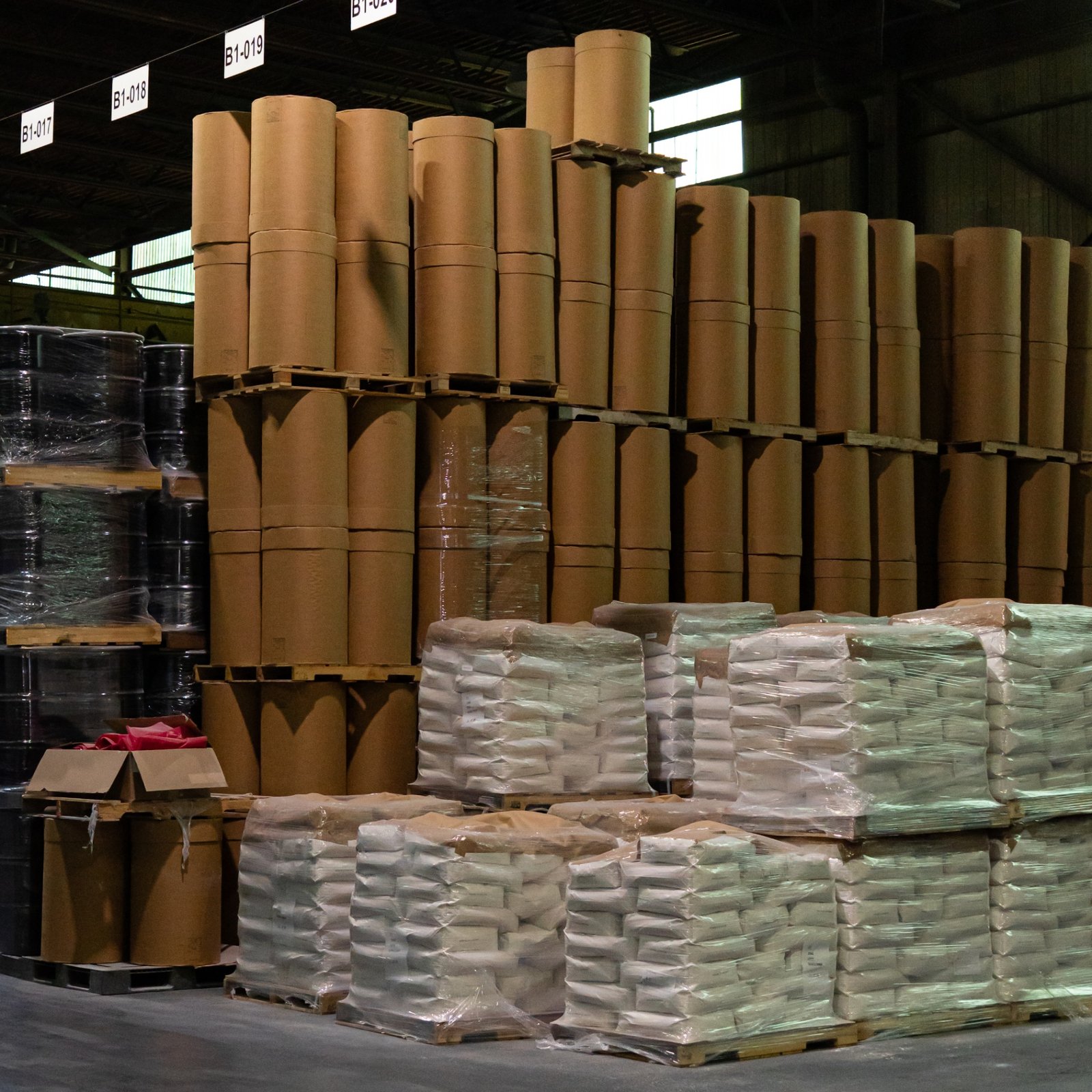
At our Elyria, Ohio facility we run both dry blending, on V-blenders and ribbon blenders calibrated per recipe, and liquid blending, including dispersions. Batches range from small R&D runs to full production campaigns, inside a 100,000 square foot plant with a silo for bulk operations.
How a toll blending project actually runs
The process is less mysterious than most first-time buyers expect. You send us the formula, the components, and the spec you need to hit. We confirm the blend procedure, the batch size, and the packaging configuration for the finished product, because packaging out of the blender is usually part of the same job: bags, pails, drums, totes, super sacks, or back into a bulk truck.
Once your materials arrive, projects typically start within 48 hours. Standard turnaround is 3 to 5 days, with rush options when your production schedule is on fire. Every batch gets documented, and if the blend needs verification, screening and particle size analysis happen in the same building rather than at a second vendor.
One thing worth saying plainly: confidentiality is the core of this business. Proprietary formulas come to us under NDA as a matter of routine, and the same walls that blend your product for you blend products for companies you compete with. Nobody sees anybody else's recipe. That discipline is table stakes for a compounding and blending partner, and we treat it that way.
What actually drives toll blending cost
Tolling is priced per project, not off a rate card, because four variables move the number more than anything else.
| Cost driver | Why it moves the price |
|---|---|
| Batch size and total volume | Setup, cleanout, and documentation are mostly fixed per batch, so larger runs cost less per pound |
| Number of components | Each ingredient adds weighing, staging, and verification steps; a 2-component blend runs faster than a 12-component one |
| Blend and QC requirements | Tight homogeneity specs, sieve verification, or retained samples add time on and off the blender |
| Packaging configuration | Filling 40,000 lb into a bulk truck is one operation; filling it into 1,600 25-lb bags with custom labels is another |
When you request a quote, having those four answers ready (volume, component count, spec, and final packaging) is what makes a same-day quote possible. We quote same day as standard practice.
Who tends to use it
Three situations bring most blending customers through our door. Manufacturers hit capacity ceilings and need overflow blending without capital spending. Distributors and formulators have a product idea and a formula but no plant at all. And companies with seasonal or lumpy demand need production muscle a few months a year without carrying it year-round. In all three cases the economics are the same: you pay for blending when you need blending, and zero when you do not.
Our team brings 100 plus years of combined chemical industry experience across specialty chemicals, CASE materials, plastics and rubber additives, ag chemicals, and water treatment. If you are weighing whether toll blending fits your product, the fastest way to find out is to send the spec and let us quote it. We do what we say we are going to do. Plain and simple.
Frequently asked questions
What is the difference between toll blending and contract manufacturing?
In toll blending, the customer supplies the raw materials and the formula, and the processor charges a fee for the blending work. In contract manufacturing, the manufacturer sources the materials and sells you finished product. Tolling keeps material ownership, sourcing control, and formula IP in your hands.
What is the minimum batch size for toll blending?
We run blends from small R&D and pilot batches up to multi-truck production campaigns, so there is no meaningful minimum. Small runs are quoted on the same basis as large ones; they simply carry more setup cost per pound, which is worth knowing when comparing a pilot run price to a production price.
How fast is toll blending turnaround?
Projects typically start within 48 hours of your materials arriving at our Elyria facility, and standard turnaround is 3 to 5 days. Rush options are available when a supply chain deadline demands it, and quotes themselves go out same day.
How is my proprietary formula protected?
NDAs are standard practice before a formula ever reaches us, access to recipes is limited to the people running the job, and blend documentation stays confidential. Protecting customer formulas is a core requirement of the tolling business, not a special request.
Can you package the blended product for us?
Yes, and most customers have us do exactly that. Off the blender we can fill bags, pails, drums, totes, and super sacks from 1 gram precision up to 40,000 lb bulk trucks, apply custom or private labels, and ship on your pallet configuration, all in the same 3 to 5 day window.
Where are you located and who do you serve?
We operate from a 100,000 square foot facility in Elyria, Ohio, minutes off the interstate west of Cleveland, and serve chemical manufacturers, distributors, and formulators across North America. Freight in both directions is routine; being in the Midwest keeps us a day or two from most of the country.
Need help with your chemical processing project?
Talk to our team today. Most projects start within 48 hours of receiving materials.