
Few things stall a production line faster than opening a container of powder and finding it has turned into hard lumps. Caking and agglomeration are common, costly, and in most cases reversible. Understanding why powders clump is the first step to preventing and fixing it.
What Causes Caking
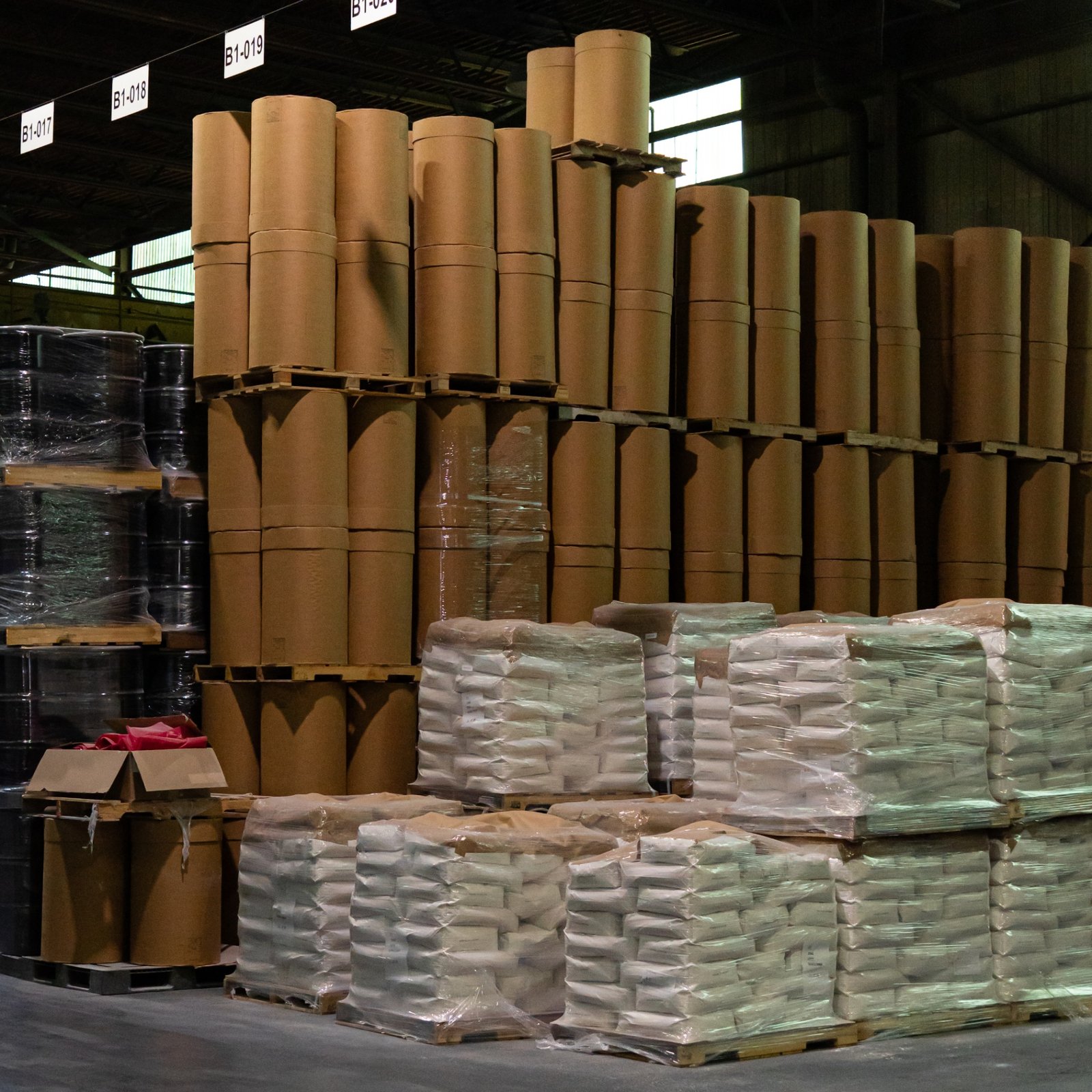
Powders cake when individual particles bond together into larger masses. The usual culprits are moisture exposure, compression under the weight of stacked storage, temperature swings that cause particles to soften and re-solidify, and electrostatic or chemical forces between fine particles. Long storage times and humid environments make it worse.
The Cost of Clumped Material
Agglomerated material cannot be dispensed accurately, will not blend uniformly, and often fails to meet customer specifications. Left unaddressed, it leads to wasted product, production delays, and rejected lots.
How Deagglomeration Fixes It
Deagglomeration, or delumping, uses controlled mechanical energy to break agglomerated particles back to their original size distribution without changing the material chemistry. It can often be done within the existing packaging, so there is no need to unpack, process, and repack.
Recovering Material Instead of Scrapping It
Warehouse inventory that has hardened, returned material exposed to moisture, or imported chemicals that agglomerated in transit can frequently be restored rather than written off. See how our deagglomeration and delumping services bring clumped material back to spec.
Need help with your chemical processing project?
Talk to our team today. Most projects start within 48 hours of receiving materials.
Related Articles
Micronization and Jet Milling: How Ultra-Fine Particle Reduction Works
When a product needs an ultra-fine, tightly controlled particle size, jet milling is often the answer. Here is how micronization works.
TechnicalWhat Is a Ribbon Blender? How Ribbon Blending Produces Uniform Dry Mixes
The ribbon blender is the workhorse of dry chemical blending. Here is how it works and when it is the right tool for a homogeneous mix.