
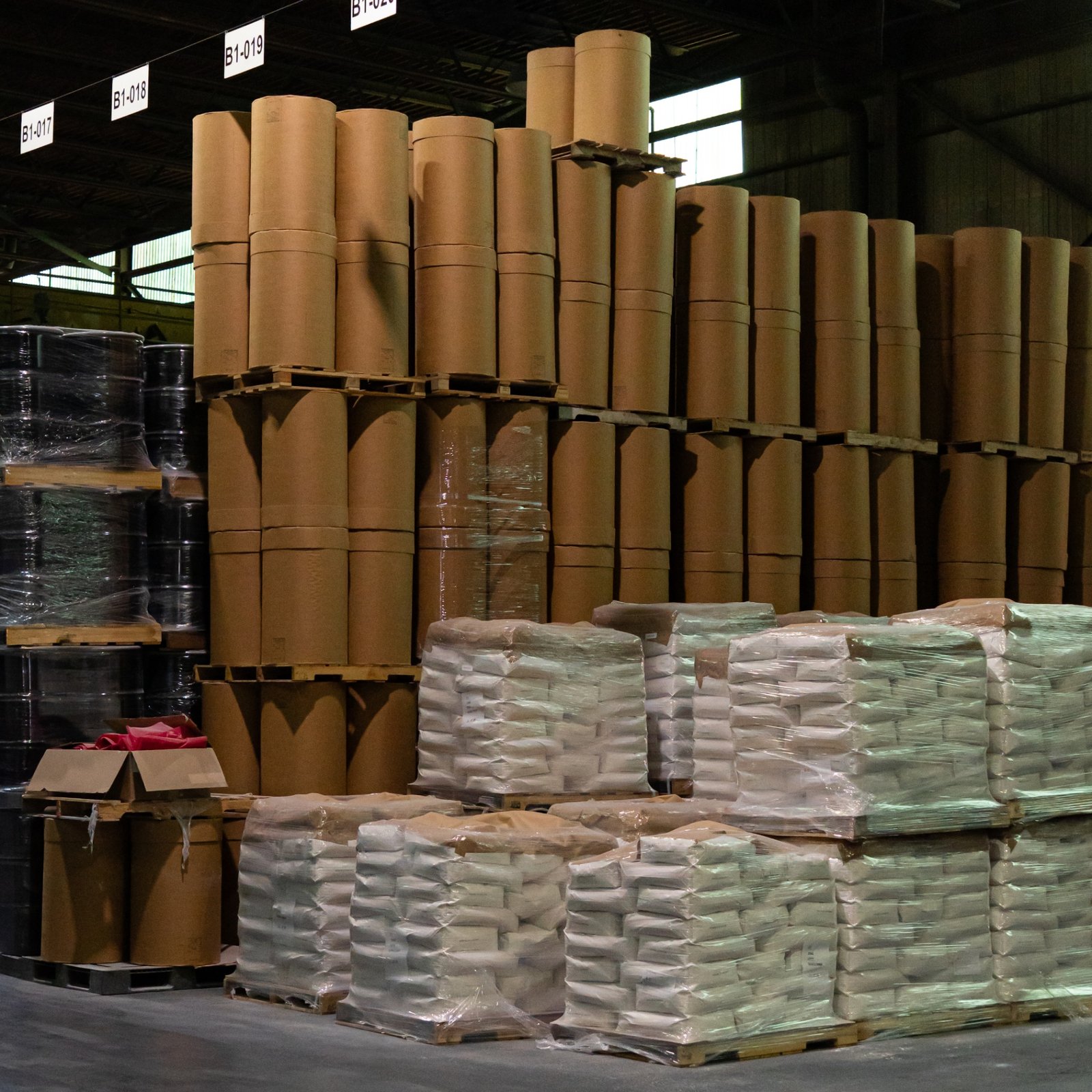
Powder agglomeration (when fine particles clump together into larger, hard masses) is one of the most common challenges in chemical manufacturing and distribution. Moisture exposure, pressure during storage, temperature fluctuations, and electrostatic forces can all turn previously free-flowing powders into unusable lumps.
The Cost of Agglomeration
Agglomerated material can't be dispensed accurately, doesn't blend uniformly, and may not meet customer specifications. Without a solution, companies face material waste, production delays, and customer complaints.
How Deagglomeration (Delumping) Works
Professional deagglomeration (delumping) uses mechanical energy to break agglomerated particles back to their original size distribution without altering the chemical properties of the material. The process can often be performed within existing packaging, so you don't need to unpack, process, and repack.
When to Use Deagglomeration (Delumping) Services
Consider deagglomeration when you have warehouse inventory that has hardened over time, returned material that was exposed to moisture, imported chemicals that agglomerated during ocean transit, or any powder product that no longer meets particle size specifications.
Need help with your chemical processing project?
Talk to our team today. Most projects start within 48 hours of receiving materials.